Athletic Performance DNA Test

Our test reveals how your DNA affects strength, endurance, recovery, and injury risk while helping you train smarter and perform better.
Genes Matter But Training Still Rules

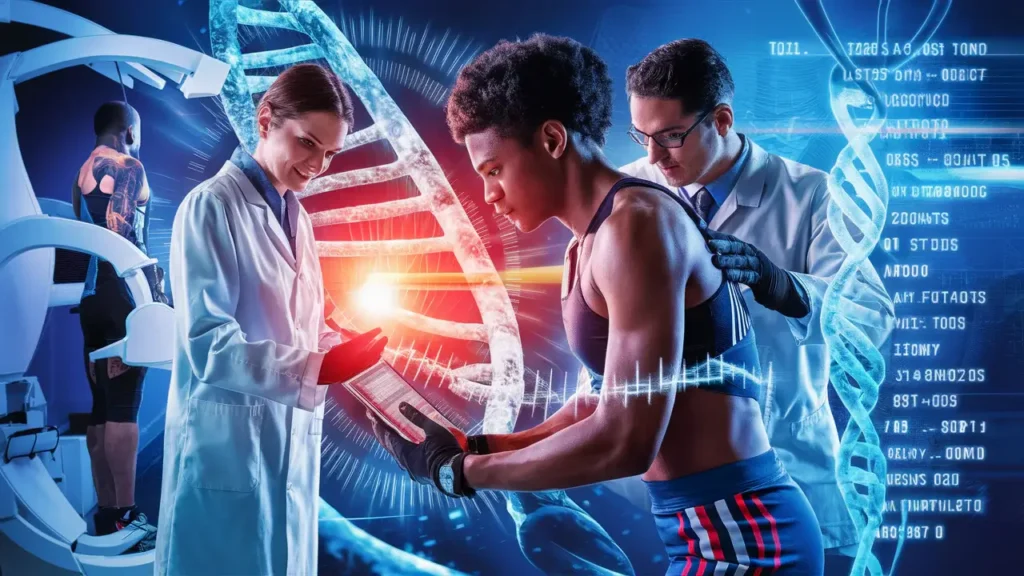
A DNA fitness test reads your unique genetic code to reveal insights about strength, endurance, recovery, and injury risk.

Your athletic performance is shaped by both genetics (your biology) and environment (how you train). Genetic traits give you predispositions — but smart training, recovery, and nutrition unlock your true sports potential.

Benefits You’ll Experience
  • Make smarter decisions: choose workouts that align with your genetic profile
  • Accelerate progress: minimize trial-and-error
  • Recover faster and reduce injury risk
  • Understand your body deeper — optimize performance, not just effort

A DNA fitness test it helps you tailor workouts, reduce injury, and recover faster.
You will evolve from shot in the dark to training smart while optimizing your performance based on your body’s blueprint.

Ten Boxes with Scroll-Triggered Animation

Power and Endurance

The Power and Endurance DNA Test examines the ACTN3 gene to determine if your body is naturally predisposed to strength, speed, or endurance. Understanding your genetic profile helps you train smarter, enhance performance, and reach your full athletic potential.

Athletic Recovery & Efficiency

This test analyzes the IL-6 gene to assess your body’s ability to control inflammation and recover after exercise. It helps you understand your recovery rate and optimize your training for better performance.

Joints Resistance Test

This test analyzes the COL1A1 gene, which produces type 1 collagen, a key component for joint protection. It helps identify your genetic predisposition to muscle, tendon, or bone injuries and recovery speed, allowing you to train safely and reduce injury risk.

Metabolization of Caffeine

This test analyzes the CYP1A gene, which affects how your body processes caffeine. It helps determine whether you metabolize caffeine quickly or slowly, revealing your risk of side effects such as insomnia, nausea, or increased heart rate.

Unlock Your Athletic Edge with Sports DNA Testing

One of our professional DNA representatives with help you take the first step with a confidential consultation.

Athletic Performance DNA Test

Frequently Asked Questions

A DNA fitness test reads your unique genetic code to reveal insights about strength, endurance, recovery, and injury risk. It helps you tailor workouts, reduce injury, and recover faster. You evolve from guessing to training smart — optimizing your performance based on your body’s blueprint.

Generally, these sports-genetics tests are for personal, performance, and coaching use, not medical diagnosis. They often don’t meet clinical or forensic standards. (Your “legal DNA paternity” product is separate and follows strict chain-of-custody protocols.)

Yes, but it must comply with California’s Genetic Information Privacy Act (GIPA), which mandates consumer consent, usage transparency, and strict rules on data disclosure

Anyone serious about fitness — not just athletes. Coaches, personal trainers, or performance-minded individuals can use it to design scientifically grounded training plans.

Strength and endurance: It can help determine if you are genetically inclined toward strength or endurance, allowing you to focus your training on your natural advantages. 
Recovery: It can provide insights into how quickly your body recovers from intense workouts and suggest ways to support faster regeneration. 
Injury risk: It can identify genetic factors linked to a higher risk of certain injuries, like tendon or ligament issues, and offer preventative strategies. 
Cardiovascular fitness: It can give you insights into your genetic potential for aerobic capacity (\(VO_{2}\) Max) and cardiovascular health. 
Body composition: It can provide genetic insights into muscle mass, fat, and water content to help with more precise training and nutrition targeting. 

No, genetics set a baseline framework, but training, nutrition, rest, and mindset largely determine how far you progress. Athletic ability results from “nature + nurture.

No, your DNA does not change. The test is done once and the results are valid for life (unless future updates to your understanding of genetics offer new insights).

Most tests are processed within 3–5 business days (or the timeframe agreed in your lab contract). (If different for your service, specify your turnaround.

It offers predictive insight. For example, certain genes (e.g. COL1A1, IL6) are linked to inflammation and connective tissue strength. Understanding your risk helps you adjust exercise loads, recovery, and prehab protocols to reduce injury likelihood.

Absolutely. We follow California standards: data is protected under GIPA, and your genetic data cannot be used or disclosed except with your express consent.

At-home kits often aren’t backed by AABB or court-level validation.
Some overpromise or misrepresent accuracy.
In contrast, our services use accredited partner labs, strict collection protocols, and deliver actionable insights—not vague reports

College of American Pathologists (CAP)

The CAP Laboratory Accreditation Program is recognized by the federal government as being equal to or more stringent that the government’s own laboratory inspection program. DDC has maintained its accreditation under the CAP program since 2004. In addition to on-site laboratory inspection, CAP accreditation requires laboratories to participate in its Proficiency Testing Program in which CAP sends samples to the lab 3 times a year for DNA testing and evaluates the lab’s results. DDC has participated in the proficiency program since 2004 and has had 100% accuracy with the expected relationship interpretation on all surveys.

Clinical Laboratory Improvement Amendments (CLIA)

The CLIA accreditation issued by the US Department of Health ensures laboratory results are timely, accurate, and reliable. DDC has been accredited by CLIA for over 19 years.

Association for the Advancement of Blood & Biotherapies (AABB)

(formerly American Association of Blood Banks)

The AABB’s Relationship Testing Accreditation program is the international gold standard for DNA paternity testing laboratories. The program establishes and promotes the highest standards of testing quality and care for patients and clients in all aspects of parentage and other relationship testing. Most courts and other government agencies mandate that DNA tests be performed by AABB-accredited laboratories. DDC received its initial AABB accreditation in 1996 and received AABB’s commendable practice recognition in 2004 for our Dual Process™.

ANAB ISO/IEC 17025 (formerly ACLASS)

ANAB is an international laboratory accreditation organization and is signatory of the IAF and IAAC multilateral cooperative arrangements (MLAs). Through the IAF, ILAC, IAAC, and APLAC MRAs/MLAs and the Multilateral Cooperative Accreditation Arrangement, ANAB cooperates with other accreditation bodies around the world ensuring that accredited certificates are recognized nationally and internationally. ISO/IEC 17025 is the international standard set for ensuring the technical competency of laboratories and covers every aspect of laboratory management including to name a few, sample preparation, analytical testing proficiency, record keeping and reports.

Ministry of Justice

The MOJ is a ministerial department that works to protect the public and reduce reoffending while providing a more effective, transparent, and responsive criminal justice system for victims and the public in the United Kingdom. DNA Diagnostics Center has been accredited by the Ministry of Justice as a body that may carry out parentage tests directed by the civil courts in England and Wales under Section 20 of the Family Law Reform Act 1969.

National Association of Testing Authorities, Australia (NATA)

NATA is a national organization that provides the independent assurance of the technical competence of a laboratory meeting stringent international and Australian standards. The NATA accreditation provides a foundation of confidence in DDC’s ability to provide consistently reliable and accurate testing. NATA lists DDC/DNA Diagnostics Center as an approved laboratory, and accepts results from laboratories accredited by NATA under scope. DDC adheres to both the Australian Family Law Act Regulations 1984 and the international ISO/IEC 17025 standards.

Metabolization of Caffeine (Non-Legal)

The test evaluates the speed of metabolization of caffeine. The genetic analysis involves the interrogation of the CYP1A gene which encodes the cytochrome P450 protein, which at the liver level is the primary enzyme involved in the metabolism of caffeine. The unfavourable variant of the gene leads to a greater risk of side effects such as nausea, tachycardia, insomnia and hypertension.

Joints Resistance Test (Non-legal)

The test evaluates the main component of the joints, type 1 collagen. The genetic analysis involves the interrogation of the COL1A1 gene. Reduced production of type 1 collagen leads to less protection from joint injuries.

Exercise has numerous health benefits, but we must be careful of injuries that occur when we do exercises incorrectly. While injuries are always a risk when we do any exercise, some people are more likely to get injured than others and partly due to their genetics. Scientific evidence has shown that some genetic variations can affect the risk of injury. People with a higher risk should adjust their training plan.

Knowing the genetic characteristics that influence an athlete’s physical form is important to discover any predispositions to muscle, tendon and bone injuries. The ability to recover after injury is also influenced by the personal genetic profile. The possible presence of a genetic variant that predisposes to tendon injuries allows us to identify an athlete with a higher than average risk of injury or one who has shorter recovery times, thus preparing the best possible training for each individual.

Recovery & Efficiency (Non-Legal)

The test evaluates athletic recovery in relation to anti-inflammatory capacity. The genetic analysis examines the IL-6 gene which codes for the protein of the same name, produced by the muscle during physical activity, with an action to regulate inflammation. The unfavourable variant of the gene leads to reduced control of inflammation and slower recovery after physical effort.

Power and Endurance (Non- Legal)

This test analyzes the ACTN3 gene, which determines whether your muscles are more suited for power (fast-twitch fibres) or endurance (slow-twitch fibres) activities.

Power

Power reflects the ability to exert maximum force for a short time.
Those with more fast-twitch fibres have high strength, speed, and explosiveness but tire quickly due to lower oxygen use and faster lactic acid buildup.
Best suited for: short bursts of activity such as sprinting, weightlifting, discus, shot put, and jumping events.

Endurance

Endurance reflects the ability to sustain low-intensity activity over long periods.
Those with more slow-twitch (red) fibres perform better in long-duration exercises, thanks to higher oxygen storage and energy efficiency.
Best suited for: long-distance activities such as marathon running, swimming, cycling, rowing, and cross-country skiing.

Infidelity DNA Test

Accusing a partner of cheating can be an extremely painful experience. DNA Infidelity Testing Now you wont have to wonderDNA infidelity testing provides a scientific solution that will help answer the question of whether or not your partner was unfaithful. By testing fabric samples of men’s underwear, women’s polyester dress, or bed sheet that you’ll be able to provide a sample. TEST CAN DETERMINE WITH OR WITHOUT MALE AND/OR FEMALE DNA! We have provided our two most common infidelity DNA test options and provide guidance on which might be best for your situation below. All consultations are free, private and 100% confidential. Please be aware that infidelity testing is for informational purposes only, due to this item not being a Court admissible test since it does not adhere to the legal chain of custody for the submitted samples.

It’s worth mentioning, however, that testing is not offered in the states of Alaska, Arizona, Florida, Georgia, Massachusetts and South Dakota due to state restrictions.

Native American DNA Test

Do you need documentation of a genetic relationship in order to apply for tribal membership? Americans all over the country have used ourNative American DNA test to verify their biological ancestry and gain access to benefits, such as scholarships or eligibility for tribal enrollment. Call our specialists now, for a free no obligation quote. DDC has staff and a special phone number to help you for tribal membership DNA testing services.

Note: This test does not establish whether or not you have Native American ancestry specifics with ethnic percentages. Its only function is for verification of blood relationships between tribe members and applicants where enrollment or membership in a tribe is concerned.

Native American DNA Test

Do you need documentation of a genetic relationship in order to apply for tribal membership? Americans all over the country have used ourNative American DNA test to verify their biological ancestry and gain access to benefits, such as scholarships or eligibility for tribal enrollment. Call our specialists now, for a free no obligation quote. DDC has staff and a special phone number to help you for tribal membership DNA testing services.

Note: This test does not establish whether or not you have Native American ancestry specifics with ethnic percentages. Its only function is for verification of blood relationships between tribe members and applicants where enrollment or membership in a tribe is concerned.

Female Lineage DNA Test

Our mtDNA test, also known as a maternal lineage test, repeats mitochondrial dna testing to confirm whether you share ancestry with others tracing the same maternal line in your family tree. Even in those cases, this examination can be enlightening when the mixture is associated with doubtful maternity and the mother of comparison cannot attend a maternity test. We cannot directly prove maternity, however, we can ascertain if the child is related to a potential maternal family member. Get in touch with us for a free consultation with one of our professionals, and find out how we can help you find your family.

Male Lineage DNA Test

Y-STR Male Lineage Testing
Y chromosome testing is ideal for situations when two or more male individuals wish to confirm whether they share the same father or have a common paternal relative. This test, carried out exclusively between males, is a highly accurate and conclusive sibling test.

Who it’s For
If you think two makes are brothers or share the same parent. Confirming relationships with paternal relatives when the alleged father is unavailable, such as a grandfather, uncle, or male cousin.

Gender Restriction:
Only biological males can be tested

If the Y-STR markers are identical, it indicates a shared paternal lineage. Proof Of Paternity offer Y-STR Male Lineage Testing. This type of siblings DNA test is an extremely accurate test and used to determine whether 2 males share a paternal line. Y chromosomes are passed down from fathers to their male children meaning that this chromosome’s inheritance pattern can then be used to trace back the paternal lineage. The conclusive results provided by this test can allow males to determine if they have a shared biological father, grandfather, or male relative

Avuncular (Aunt/Uncle) DNA Test

Get the legal documentation you need when the father is unavailable
An avuncular DNA test analyzes the DNA of an aunt or uncle and compares it with a niece or nephew to determine if there’s a biological relationship. Because aunts and uncles share genetic markers with their siblings, comparing these markers can indirectly verify parentage.

The test is normally done when the only means of establishing paternity is by testing the alleged father’s relatives to see whether they are related to the child in question.

The lab cannot perform an avuncular test if the aunt/uncle is NOT a full sibling to the alleged father in question.

Common Uses for Avuncular DNA Tests:
Confirming relationships when parents are unavailable for testing
Clarifying family history or genealogical research
Establishing biological relationships for personal reasons or legal cases

Family Relationship DNA Test

Proof of Paternity provides accurate DNA testing for complex family situations. In the absence of close potential relatives to test, other family members can provide additional support for helping to decipher a child’s genetic relationship in the family. Our DNA Family Reconstruction Testing is an inclusive battery of tests intended to offer rapid precise answers. Let us help with complex cases. Call our experts today for a free consultation!

Twin Zygosity DNA Test

Twins are usually categorized as identical or fraternal at birth by a doctor based on physical features and placental examination, although these determinations aren’t always accurate. A twin DNA test, often called a zygosity test for twins, can determine once and for all if your twins are identical or fraternal. Peace of Mind’s Twin Zygosity Test compares the genetic markers for each twin to see if their profiles are identical/ match in anyway and provides reliable results regardless of the twins’ age.

Sibling DNA Test

Determine whether or not you are truly related to your sibling. This test is recommended when the alleged siblings are a male and a female who would like to know whether they share one or more common parents. Easy-to-use home kit will get you both the answers whether you share one biological parent, or both biological parents. Or perhaps none? Proof of Paternity offers siblings DNA testing services to help brothers and sisters discover whether they share both biological parents, a single parent or have no parents in common. ; in 5-7 working days; Support at every step of the process.

Common uses cases for this test?
We want to know if we share the same parent.

We think we are brothers, how can we determine our relationship?
This test determines male lineage. Rather than a regular siblings DNA test, a Y chromosome test can be carried out when only males are involved and they wish to discover whether they have the same birth father or different birth fathers. Visit our Y chromosome testing page for more information on this test.

Grandparent DNA Test

If a putative father is not available to undergo paternity testing, one or both of his parents may also be tested to determine the probability of paternity. Peace of Mind’s Grandparent DNA Test has the ability to determine parentage between a child and their grandparent(s) and supply you with the answers you need available to do in your own home. Contact us for a free consultation – our friendly customer service team is here to help!

Maternity DNA Test

A maternity test determines whether the tested woman is a biological mother of an individual. This is a kind of testing much like paternity testing – but rather than comparing the child’s DNA profile to that of the father, it compares it to their mother. Even when the alleged father’s DNA is not featured, Peace of Mind Paternity’s maternity testing services can still provide conclusive answers, confirming if a child’s DNA does or does not match that of his or her mother.

Shopping Cart
No products in the cart.
Add Order Note
Estimate Shipping